Land-grant colleges and universities — institutions built using proceeds from the sale of lands taken from Indigenous tribes — are failing the very communities whose dispossession made them possible, according to a new report from the Education Trust released this month.
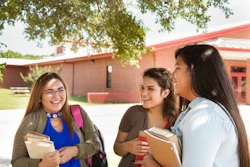
 File photo
The analysis, which examined Indigenous student enrollment, debt burdens, and campus experiences across the University of California system and land-grant institutions nationwide, found that Native students remain the most underrepresented racial or ethnic group in American higher education, even as the Trump administration moves to dismantle diversity, equity, and inclusion programs that advocates say provide critical support to those students.
Only 25.4 percent of Indigenous students were enrolled in degree-granting postsecondary institutions in 2021, compared with 65 percent of Asian students, 42.9 percent of white students, 35.9 percent of Black students, and 34.4 percent of Latino students, according to the report.
The findings carry particular weight given the origin of many land-grant institutions. Congress passed the Morrill Act of 1862, which established the first land-grant colleges, using proceeds from the sale of lands seized from Native tribes. Despite that foundational relationship, Indigenous students say they often feel invisible on those same campuses. Many land-grant institutions, the report notes, describe that land as "donated" or "leftover" — language the authors say "erases the violent histories of dispossession and lived experiences associated with it."
EdTrust researchers conducted in-depth interviews with six Native American and Indigenous undergraduate and graduate students across four UC campuses — UCLA, UC Santa Barbara, UC Riverside, and UC Davis — and found three recurring themes: a profound lack of belonging, inadequate institutional support, and doubts about the economic value of their degrees.
Students described campuses where cultural ignorance from peers and professors alike was routine. "Some professors say very derogatory things," a UC Riverside student told researchers. "And they'll just be like, 'Oh well, we can say that because it's in history.' And I'm like, 'Well, you can't really say it now; you have to understand that it's still offensive.'"
The isolation ran deeper than individual interactions. "I have never had an Indigenous professor in any of my classes," one UCLA student said. A UC Davis student described the particular comfort of finding peers who share similar backgrounds: "There's just something about being surrounded by people who have, if not the same, similar life experiences as you, especially of being Native in America and what that looks like — finding solidarity."
A UCSB student put the need plainly: "Students need to have a safe space to learn more about their identity and really explore what it means to be an Indigenous student living in the diaspora and being a student at a predominantly white institution."
Where students most expected support, they found absence. "I learned that the university was never there for us," one UCLA student said flatly.
Financial precarity compounded the feeling of institutional abandonment. "I was struggling, I had no job for eight months and I was struggling," another UCLA student recounted. "And even when I had a bill because of housing or something, I couldn't pay it off. And that's why I had that fear of being kicked out or not taking classes because I couldn't pay for it."
Cultural organizations that might otherwise provide community were left to fend for themselves. "The university also doesn't really fund cultural groups; like our group is totally self-funded and they raise funds by themselves," a UCLA student said. A UCSB student noted a broader resource gap: "I think there's a lot of lack of resources that students face specifically — our Indigenous students and Black students. I feel like there's definitely more resources that the institution should be able to streamline for us."
The report found that while the UC system performs relatively well on affordability — keeping debt-to-earnings ratios well below the threshold associated with financial distress — all undergraduate-serving UC campuses received D or F grades for student representation, meaning their student bodies fail to reflect the racial and ethnic demographics of California as a whole. Indigenous students account for just 0.6 percent of enrollment across the UC system.
The report comes as the Trump administration's executive orders targeting DEI programs and the passage of the One Big Beautiful Bill Act threaten to intensify existing disparities. The legislation is expected to restrict student loan access and heighten repayment barriers — pressures that fall disproportionately on Indigenous students, who come from communities made economically vulnerable by generations of colonization and displacement.
Students are already questioning whether the investment in higher education is worth it. "I think we're seeing how bachelor's degrees aren't worth what they used to be worth," a UCSB student said. "And now students are kind of forced to get a master's or another type of degree to help make up for the fact that there's a devaluation of their degrees." A UCLA student offered a cultural frame for that uncertainty: "As Native people, we're not subjected to higher education; it wasn't a priority or seen as something achievable — it was seen as a luxury that was not necessary."
EdTrust is calling on states and institutions to take four concrete steps: expand financial support to cover graduate tuition for Indigenous students; deepen partnerships with tribal colleges; fund tenure-track positions in Native American studies; and broaden eligibility for tuition assistance programs beyond federally recognized tribal enrollment — a requirement that excludes many Indigenous students whose ties to tribal rolls were severed by colonization or adoption.
The report points to several promising models, including the UC Native American Opportunity Plan, established in 2022, and Michigan's Indian Tuition Waiver, which has provided tuition-free access to public universities for qualifying tribal members since 1976. At Penn State, meanwhile, the Faculty Senate issued advisory reports in 2023 noting that just 0.36 percent of tenure-line faculty identify as American Indian or Alaska Native.
"Education is a sovereign and treaty-guaranteed right for Indigenous peoples," the report's authors wrote. "Yet many Native students face significant barriers to accessing and affording higher education." Across the land-grant system, that right remains largely unrealized.