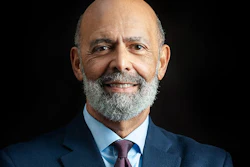
Before 2014, there was no international convening devoted solely to urban education—not one, anywhere in the world. Dr. Chance W. Lewis, the Carol Grotnes Belk Distinguished Professor of Urban Education and founding executive director of the Urban Education Collaborative at University of North Carolina at Charlotte, created the first one out of frustration with conferences that simply rehashed the same problems year after year. Lewis is one of the field’s defining scholars, and he shaped the International Conference on Urban Education (ICUE) around that same conviction: urban education needs solutions, not another round of diagnosis.
I have watched that frustration turn into a budding movement over the past twelve years, through five convenings held in 2014, 2016, 2018, 2022, and 2024—the COVID-19 pandemic forced a pause in 2020. This year marks the sixth, held November 4-7 in Punta Cana, Dominican Republic. Registration already sits above 400 and is on pace to reach the roughly 800 attendees the conference drew last cycle. That growth has come almost entirely by word of mouth, across research universities, Historically Black Colleges and Universities (HBCUs), K-12 systems, and community-based organizations that finally had a place to bring this work.
Lewis is certain about why ICUE matters more in this political moment than in years past.
“When you think about the current context of where we are, not only in our country but internationally, you see a situation related to the cutting of many diversity initiatives, and all the things that are going on in the country,” he told me. “But despite all of that, there’s still a groundswell and a momentum of people looking for solutions. Just cutting programs does not engage the realities that are on the ground.”
Every College of Education at a university in this country needs to operate from that starting point. Urban spaces are not a single-issue problem. They are shaped by race, economics, gentrification and layers of disinvestment that don’t disappear when a program’s funding does. The students inside those spaces still need teachers who understand where they come from, regardless of which programs Washington and state legislatures chooses to defund.
This is where higher education has to stop treating urban education as someone else’s assignment. Teacher preparation programs are the primary entry point into the profession. When colleges and universities train future teachers in isolation from the K-12 systems and communities they will serve, they produce paperwork, not readiness. ICUE was designed to break that isolation. As Lewis put it, “Educators from many facets of life look at how they improve educational opportunities for students in these spaces.” The three-day ICUE convening forces higher ed, K-12, and community stakeholders into the same room, at the same time. Most conferences segment those groups by design. ICUE refuses to.
That refusal explains this year’s keynote choice. Dr. James L. Moore III of The Ohio State University brings experience that spans the National Science Foundation and a distinguished professorship in urban education. He will join a group of distinguished academics including Drs. Gloria Ladson-Billings, Leslie T. Fenwick, Tyrone Howard, Pedro Noguera, and Sonia Nieto who have addressed the conference in previous years.
“He understands the issues and solutions, but from multiple levels, not only as a trained school counselor, but all the way up,” says Lewis, about Moore. “That brings a lens that people don't often get to hear from.”
Higher education needs more scholars who move fluidly between research and practice.
Then there is the crisis this country has discussed for a generation without matching its words to a strategy: the shortage of Black male teachers. Lewis is candid about where the field still falls short.
“The reality of it is, though, for school districts, they still don’t really know how to recruit well,” he said. “They basically wait to see who’s already applied, instead of actively recruiting the way Black males are recruited for athletic programs at the universities.”
Two organizations are proving there is a better way. The Center for Black Educator Development runs on a three-pronged model— recruit, train, retain—that treats the shortage as an engineering problem, not a recurring headline. Its Freedom Schools and Future Teachers of Excellence Fellowship reach Black students years before a college application, then use coaching and scholarships to keep them in the profession, not just get them into it. Educators Rising runs the parallel pipeline at national scale, guiding more than 20,000 aspiring educators to see teaching as leadership rather than a fallback. Together, these two organizations are doing the recruiting work individual school districts have avoided for decades.
There are others too, including the Call Me Mister Program. Founded at Clemson University in 2000, in partnership with three HBCUs—Benedict, Claflin, and Morris— the program pairs teacher education with mentorship, cohort living, tuition assistance, and help with job placement. The results are impressive. At least 85 percent of MISTERs who have graduated since 2004 are still in the classroom. Twenty-five years in, the program has expanded into ten additional states, evidence that a recruitment model rooted in community and accountability outlasts one funded and then forgotten.
ICUE has been doing its own version of that work for over a decade. Its high school and HBCU undergraduate components are not symbolic. Those students train for four to six months before they ever present research on an international stage. A new opportunity session will put those students directly in front of university representatives, extending the pipeline into the institutions meant to receive it.
Lewis described his original vision of ICUE participants to me this way: “I saw the people in my mind,” he said. “I just didn't know their names yet.”
Twelve years later, those names fill research universities, HBCUs, K-12 districts, and communities across the globe. That is what a field looks like when it decides to organize itself instead of waiting to be rescued.
Higher education has a standing invitation to grow alongside it.
Dr. Jamal Watson is a higher education consultant, professor and associate dean of Graduate Studies at Trinity Washington University and the author of this bi-weekly column. Watson is the former executive editor of Diverse: Issues In Higher Education (now The EDU Ledger) and is the author of The Student Debt Crisis: America’s Moral Urgency (Broadleaf Books, 2025)