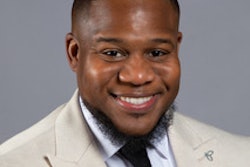
Title: Assistant Professor, Department of Biomedical Engineering, University of Florida
Log in to view the full article
Title: Assistant Professor, Department of Biomedical Engineering, University of Florida
Age: 38
Education: Ph.D., Biomedical Engineering, Rutgers University, School of Engineering; B.S. Biomedical Engineering, University of Virginia, School of Engineering and Applied Science
Career mentors: Dr. Joseph W. Freeman, Rutgers University; Dr. Edward Smith and Dr. Robin Queen, Virginia Tech; Dr. Karen Troy, Worcester Polytechnic Institute; Dr. Kharma Foucher, University of Illinois Chicago; Dr. Treena Arinzeh, Columbia University; Dr. Kyle Allen, University of Florida; Dr. Louis Soslowsky, University of Pennsylvania; and many others who have helped her along the way
Words of wisdom/advice for new faculty: Your journey is uniquely your own. Don’t waste energy comparing it to anyone else’s. Success comes in seasons, and your season will come.
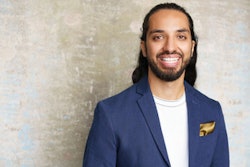
 Dr. Brittany L. Taylor
“She’s imaginative in terms of coming up with new ideas and ways to think about tissue healing,” says Freeman. “Ways to think about regenerating the right tissue structure along with the necessary volume of tissue. … She’s always been that way, going for it, doing whatever is necessary to get the job done and seeing her vision all the way through.”
Taylor is motivated by her colleagues in the field and the research they have developed. She thoroughly reads relevant literature and listens to people in the biomedical community to identify the information needed in the field and then explores those things through a different lens.
“I’ve leveraged my background in biomaterials and tissue engineering and use my expertise in innovative ways,” Taylor says. “For example, with tissue engineering biomaterials are used to create a matrix that looks like native tissue matrix to promote cellular attachment and infiltration, ultimately leading to newly developed tissue. What I’ve done is use the biomaterials to engineer in vitro models that simulate the microenvironment the cells are going to be in to study different mechanisms of tendon health and disease.”
She investigates why cells are doing what they’re doing depending on their surroundings and why tissue responds in a certain manner, using that information to drive therapeutic development. Taylor became interested in musculoskeletal engineering, specifically tissue engineering and regenerative medicine, because three family members had severe orthopedic injuries and experienced long-term complications. She was interested in how the human body can be leveraged to regenerate and repair tissues without having to do invasive surgery, like implanting a metal rod to replace critical size bone defects.
Currently, Taylor has three Ph.D. students, one post-doctoral trainee and 12 undergraduates in her lab.
As a first-generation college student, mentors, advocates and sponsors played a huge role in her educational and career trajectory. Today, Taylor is a mentor for students in her lab and beyond, seeing each person as an individual and meeting them where they are at. She teaches one course per semester — varying between undergraduate and a graduate course she developed — and recently received the Faculty Excellence in Teaching Award from her department.
“She makes sure the students know why they’re doing what they’re doing so that they can begin to eventually take on and design their own experiments,” says Freeman.
Taylor is also active in outreach programs funded by her department, and she personally partnered with her church to host an annual summer science camp.
The current projects of the Taylor Lab are leveraging in vitro models, pre-clinical animal models and clinical samples to study tendon fibrosis (tendon scarring), tendon pain…and tendon biomechanics, looking at the way tendon biomechanics change with age, disease and depending on the gender of the patient. The findings propel forward applied research projects, designing treatments that are tailored to the patient and directly address the underlying cause, not just the symptom.
“We aim to identify the key drivers of disorganized scar tissue and pain, enabling the development of targeted therapeutics and rehabilitative strategies that mitigate tendon fibrosis, reduce pain and restore healthy biomechanics,” Taylor says. “Ultimately, my goal is to advance musculoskeletal health and improve quality of life.”