Welcome to The EDU Ledger.com! We’ve moved from Diverse.
Welcome to The EDU Ledger! We’ve moved from Diverse: Issues In Higher Education.

Create a free The EDU Ledger account to continue reading

When AI Cheating Goes Viral, Colleges Face Hard Questions

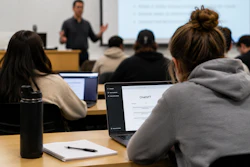
Ben Mullins O Xv3bz R7jx I UnsplashWhen history professor Jason Gibson posted a TikTok video about how he set a trap to catch his students using AI to cheat on their midterms, he wasn’t doing it to court attention.

“I never asked for the spotlight,” Gibson, who teaches at Alcorn State University, posted on his LinkedIn profile. “I just committed to my calling. When your purpose is bigger than your ego, the platform will find you.”

Indeed, Gibson’s video has not only generated hundreds of thousands of views but coverage in national news outlets and tabloids, such as Today and the New York Post. More importantly, Gibson’s headline-grabbing ploy is fueling the debate about how far faculty and administrators should go to prevent students from using AI to do their coursework and write their term papers.

“I am not a fan of trapping students,” Dr. José Antonio Bowen, author of several books on teaching with AI and a senior fellow at the American Association of Colleges and Universities, told The EDU Ledger. “Good teaching relies on trust.”

Daniel S. Schiff, assistant professor of political science at Purdue University and co-director of the Governance and Responsible AI Lab, had a different take.

“I can't blame this instructor for doing this here,” Schiff said when asked for his response to Gibson’s tactic, which he said educators have been using for years.

“Many institutions are at a breaking point,” Schiff said. “We now have pervasive, severe cases of misconduct, and students skipping historically large portions of work.”


Indeed, the AI-assisted cheating that Gibson exposed in his class at Alcorn State is by no means isolated. Similar cheating scandals – and the pervasiveness of using AI to cheat in general – has rocked colleges and universities of all sorts. Recent cases involve a computer science professor at Purdue who threatened to flunk his students this past spring if they didn’t confirm or deny his suspicions that they had used AI to cheat on their assignments. The threat came the day before the deadline to drop the class – and more than half withdrew, although the university ultimately dropped the cheating allegations.

Princeton University announced in May that it would begin proctoring exams due to concerns about “widespread” use of AI to cheat – discarding an honor system that had been in place since 1893.

To catch his students cheating, Gibson explained in his now-viral TikTok video how he embedded hidden text in a writing prompt that called on students to compare the Industrial Revolution with the digital age of today. The hidden text stated that the essay should use the word Madagascar in a way that makes no sense.

When students turned in their exams, Gibson explained, 32 out of 35 essays had nonsensical references to Madagascar – making it “more than obvious” that the students simply copy and pasted the writing prompt into an AI tool and didn’t bother to proofread what the AI tool produced.

“So, students, if you’re going to use AI to generate the entire response, at least re-read it,” Gibson said half-jokingly. “At least try to ensure that it makes a little bit of sense. Try to put it in your own words.”

Scholars say it’s important to let students know that they can hurt their own learning when they rely on AI. But they must also be smart about how they do it.

Bowen said it’s important to understand the reasons why students use AI to cheat. Such factors can include whether students view an assignment as “busy work,” whether the professor’s instructions were clear, or if they ran out of time but know their future depends on their grade.

“There are fixes,” Bowen explained in an email to The EDU Ledger. “Make sure every assignment and assessment explains why it is important – you don’t cheat at the gym – and give students SOME flexibility about deadlines.”

Bowen said students are aware that AI might damage their learning but use it anyway for summarizing, even though research has shown that using AI to summarize also hurts learning because in having AI do the job, students bypass the process it takes to build expertise.

“All of this means we need to redesign for the new age,” Bowen said, calling attention to a page on his website – weteachwithai.com – in which he offers a series of design principles for teaching in the age of AI.

A key recommendation is to do more to motivate students to do their own work. “Forbidding AI without increased motivation and transparency can leave unguarded AI products as a tempting efficiency,” the page states.

Schiff, the AI scholar at Purdue, said there are concrete steps that institutions can take to guard against using AI to cheat. Those steps include:

  • Being intentional about AI use in a way that aligns with learning goals within a specific discipline.
  • Setting up “skeptical” procuring organizations to evaluate AI tools and how they impact learning instead of leaving it up to teachers to figure out.
  • Pool private sector funding to promote responsible innovation. “This would support things like: teacher time for professional development, curriculum adjustment, extra student tutoring and interventions, and research and development of appropriate governance and ethics strategies,” Schiff said.
  • Returning to trustworthy assessments. “That probably means things like: more in-class exams, stronger requirements for promotion and graduation, more emphasis on standardized tests, and other strategies to deter shirking or AI cheating and encourage genuine learning,” Schiff said.

Gibson said he finds it difficult to accept what fellow academicians say on the topic of AI-based cheating because too often they speak in definitive terms on something that’s new and evolving.

“Everyone feels like they have the solution,” Gibson said in a separate video. “When it comes to this particular topic, the reality is AI has not been immersed into the educational process, or the educational realm long enough for us to be able to conduct and conclude enough research for us to justify changing entire processes in academia based on our findings.

He continued: “You don’t know best practices for navigating academia with AI. I don’t know. We’re all just out here innovating and  implementing and trying to hold on to some level of academic integrity in the process … Let’s stop acting like we all have the answer because we don’t.”

The trusted source for all job seekers
We have an extensive variety of listings for both academic and non-academic positions at postsecondary institutions.
Read More
The trusted source for all job seekers